
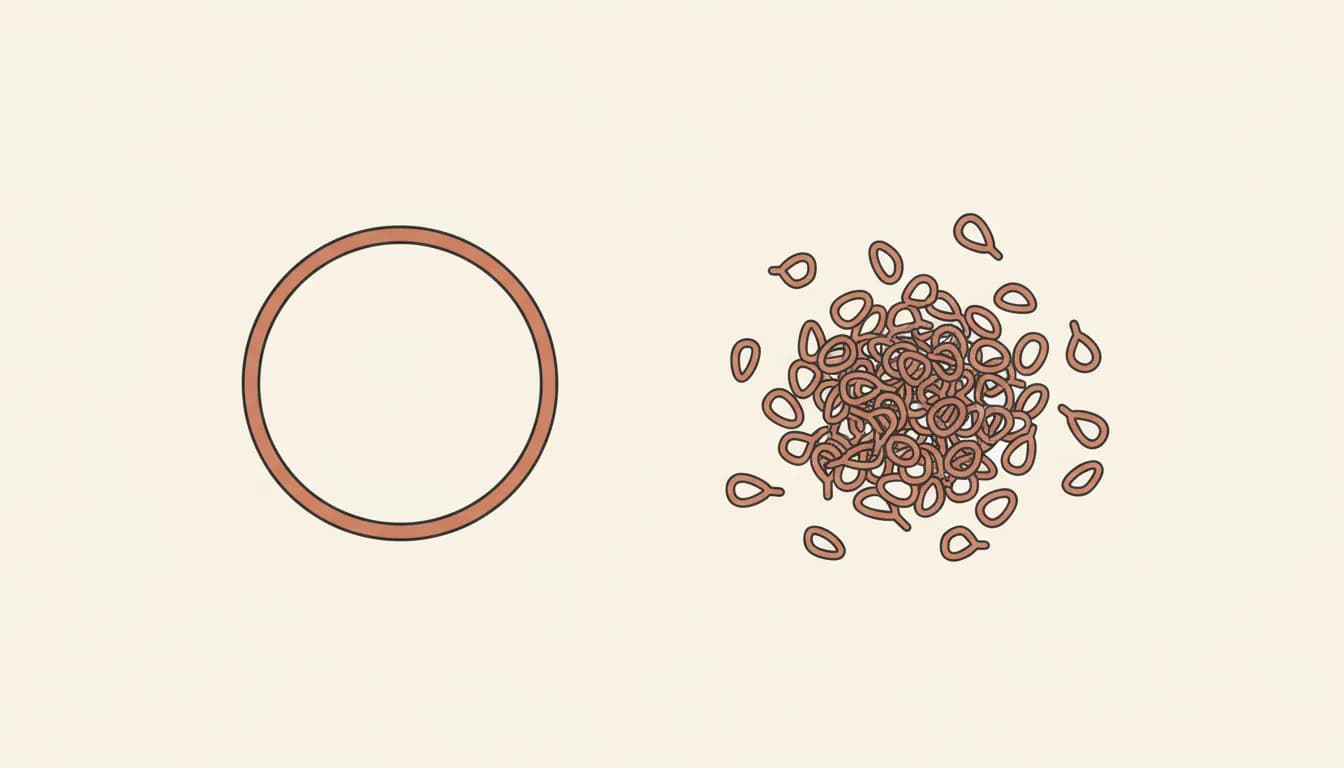
If you read AI engineering papers in 2024, you would think the future was orchestrated swarms — planner agents handing off to coder agents handing off to reviewer agents. In 2026 the production winners are almost universally single-loop: one agent, one history, one set of tools, running until done. Here is why.
What a single-loop agent actually is
Pseudocode:
while not done:
  step = model(messages, tools)
  for call in step.tool_calls:
    result = run(call)
    messages.append(result)
  if step.finish_reason in ("stop", "tool_calls"):
    continue
That is the whole architecture. No router, no planner, no graph. Just a loop and good tools.
Why it wins
1. No information loss between agents
Every multi-agent system pays a tax: the context one agent built up has to be summarized for the next. Summaries lose nuance. Single-loop agents never pay this tax — every observation is in the same history forever.
2. Failure recovery is local
When a tool call fails in a single loop, the very next model call sees the error and decides what to do. In a swarm, the failure has to bubble up through layers of coordination. By the time the right agent hears about it, the context that explains it is gone.
3. The model is already a planner
Frontier models in 2026 plan internally. Adding an external planner duplicates the work, often with worse information. The exception is when planning needs to be visible to the user (plan mode), which is just a different prompt to the same loop.
4. Latency compounds
Each hop between agents is at minimum one extra round trip — often more, because hops typically happen serially. A 4-agent pipeline with 1.5s round trips spends 6s on coordination before it does anything useful.
Where swarms still make sense
- Genuinely independent tasks. Write copy and generate an image in parallel. No context-sharing needed.
- Different privileges. A code-writing agent should not have your billing credentials.
- Different models. Use a small model for classification, a frontier one for synthesis.
Note that all three are parallelism patterns, not orchestration patterns. They do not require handoffs.
How Vibely does it
Vibely is one while loop with one flat message history and a flat tool registry. Parallelism happens via Promise.all on tool calls within a single turn; a spawn_subagent tool exists for genuinely independent side quests, but the main build never hands off to one. At 75% of the context window we route the same conversation to a larger-context model, and compaction only kicks in past 90%. Self-heal is capped at 3 retries per error. That's the entire architecture, and it is load-bearing: every rule above exists to keep information in one history instead of moving it between agents.
The lesson
The most expensive thing you can do in agent design is move information from one place to another. The single-loop pattern is the architecture that minimizes this. As models get smarter, the pattern wins more, not less.